.JPG)

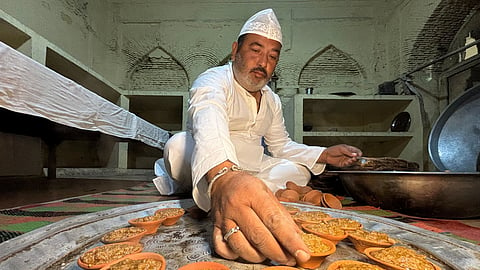
In the heart of Lucknow, a remarkable piece of culinary history has been brought back to life—a nearly 200-year-old royal kitchen that once served the nawabs of Awadh.
Built in 1837 by Muhammad Ali Shah, this “Shahi Bawarchi Khana” was more than just a kitchen. It was a community institution, feeding not only royalty but also the public, especially during religious occasions like Ramzan and Muharram—a tradition that continues even today.
Over time, however, the structure began to deteriorate. Cracked walls, exposed bricks, and peeling plaster put this historic space at risk. Recognising its cultural and architectural significance, the Archaeological Survey of India stepped in to restore it using traditional methods rather than modern construction.
The restoration process itself is as fascinating as the kitchen’s history. Instead of cement, workers used age-old materials like lime mortar mixed with natural ingredients such as jaggery, lentils, and brick dust—techniques once common in Mughal-era architecture. This careful approach ensures that the structure retains its original character while becoming strong enough to endure the future.
What makes this kitchen truly unique is that it has never stopped serving. Even during restoration, food continued to be prepared and distributed to the needy, with hundreds of people fed daily through a system that has been running for generations.
Today, the revived kitchen stands as more than a restored monument—it is a living legacy. It reflects Lucknow’s deep-rooted culture of generosity, community kitchens, and culinary heritage, proving that some traditions don’t just survive history—they continue to nourish it.
A 19th-century royal kitchen in Lucknow, built by Muhammad Ali Shah, has been carefully restored by the Archaeological Survey of India using traditional techniques—and continues to serve food to the public, keeping a centuries-old tradition alive.
.png?w=50&fm=png)